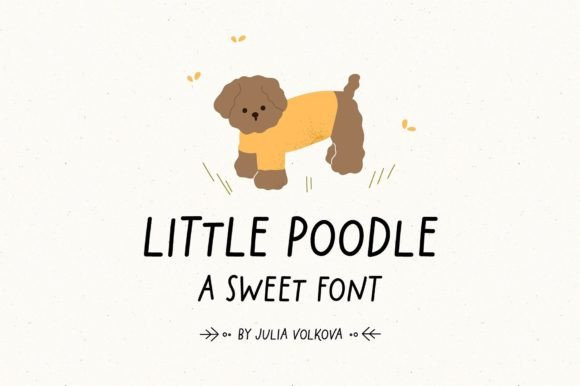
Little Poodle: A Playful and Stylish Font for Versatile Design Needs
Little Poodle is a distinctive typeface that blends playfulness with professionalism, making it an appealing choice for designers across various industries. With its youthful spirit and elegant structure, this font is well-suited for both casual and formal design applications. Whether you're creating branding materials, digital content, or promotional items, Little Poodle offers a unique aesthetic that stands out without overwhelming the message.
Understanding the Characteristics of Little Poodle
Little Poodle features rounded, soft curves that give it a friendly and approachable feel. This makes it ideal for projects that aim to convey warmth, creativity, or a sense of fun. At the same time, the font maintains a level of clarity and readability that is essential for professional use. Its clean lines and balanced proportions ensure that text remains legible even at smaller sizes.
One of the standout features of Little Poodle is its PUA (Private Use Area) encoding. This means that users can easily access a wide range of glyphs and ligatures, allowing for more creative typography without the need for additional tools or plugins. The inclusion of these special characters adds versatility, enabling designers to craft visually engaging compositions with minimal effort.
Comparing Little Poodle with Similar Fonts
When considering alternatives to Little Poodle, it's important to evaluate how it stacks up against other fonts in terms of style, functionality, and suitability for different projects. For instance, fonts like Quicksand or Open Sans are known for their modern, minimalist designs, which may be more appropriate for technical or corporate environments. However, these fonts lack the whimsical charm that Little Poodle brings to the table.
On the other hand, fonts such as Bubblegum Sans or Pacifico share a similar playful tone but often sacrifice readability for stylistic flair. Little Poodle strikes a balance between these extremes, offering a design that is both engaging and functional. This makes it a strong contender for projects that require a touch of personality without compromising on professionalism.
Strengths of Little Poodle
- Versatility: Suitable for a wide range of design applications, from business cards to social media posts.
- Readability: Despite its playful nature, the font remains easy to read, even in smaller sizes.
- Customization: The PUA encoding allows for extensive customization through ligatures and special characters.
- Consistency: Maintains a cohesive look across different platforms and mediums.
Potential Limitations
While Little Poodle has many strengths, it may not be the best fit for every project. For example, in highly technical or formal contexts, such as legal documents or scientific reports, a more traditional serif font might be more appropriate. Additionally, the font’s rounded style could make it less effective for long blocks of text where sharp, angular fonts are preferred for emphasis and clarity.
Best-Fit Situations for Little Poodle
Little Poodle shines in situations where a lighthearted yet polished appearance is desired. It is particularly well-suited for the following scenarios:
- Branding and Logo Design: The font's friendly and stylish look can help create a memorable brand identity, especially for businesses targeting younger audiences or those in the entertainment, fashion, or lifestyle sectors.
- Social Media Content: With its eye-catching appeal, Little Poodle is perfect for headlines, captions, and promotional graphics on platforms like Instagram, Facebook, and Twitter.
- Invitations and Special Occasions: Whether it's a birthday card, wedding invitation, or holiday greeting, the font adds a personal and festive touch that enhances the overall experience.
- Product Packaging and Labels: The font's readability and visual appeal make it ideal for product names, taglines, and promotional messages on packaging.
In contrast, if your project requires a more serious or academic tone, you might want to consider a font that is more conventional or structured. However, for creative and dynamic projects, Little Poodle offers a compelling option that balances style with substance.
Realistic Examples and Practical Applications
Imagine designing a new line of children's toys. Using Little Poodle for the product names and marketing materials would instantly convey a sense of fun and approachability. Similarly, if you're launching a boutique clothing brand, the font can help establish a trendy and youthful image that resonates with your target audience.
For digital projects, such as a website or mobile app, Little Poodle can be used for headings and call-to-action buttons to draw attention and encourage engagement. Its compatibility with web design tools ensures that it performs well across different devices and screen sizes.
Another practical use case is in event promotions. Flyers and posters for concerts, festivals, or community events can benefit from the font's vibrant energy, making them more attractive and engaging for potential attendees.
Considerations When Choosing Little Poodle
Before deciding to use Little Poodle, it's important to consider several factors that can influence its effectiveness in a particular context. These include:
- Target Audience: Is your audience likely to respond positively to a playful font? If so, Little Poodle could be a great match.
- Project Type: Will the font be used for short phrases or long paragraphs? While it works well for headlines and titles, it may not be the best choice for lengthy text.
- Design Goals: Are you aiming for a modern, professional look, or do you want to inject some personality into your design? Little Poodle can help achieve either goal depending on how it's used.
- Compatibility: Ensure that the font is supported by the software or platform you're using, and check for any licensing restrictions that may apply.
By carefully evaluating these factors, you can determine whether Little Poodle is the right choice for your project. If you're looking for a font that combines style, versatility, and readability, Little Poodle is definitely worth considering.
Ultimately, the decision to use Little Poodle should be based on the specific needs of your project and the message you want to convey. By understanding its strengths and limitations, you can make an informed choice that aligns with your design goals and audience expectations.